The Ultimate Guide to Mastering Pickleball Techniques

Pickleball is a highly accessible, fast-paced paddle sport that is incredibly fun for players of all ages. However, to truly elevate your game, you need to master the fundamental strokes and strategic court movements.
Below is a comprehensive guide to essential pickleball techniques, ranging from beginner basics to advanced tactics.
1. The Forehand
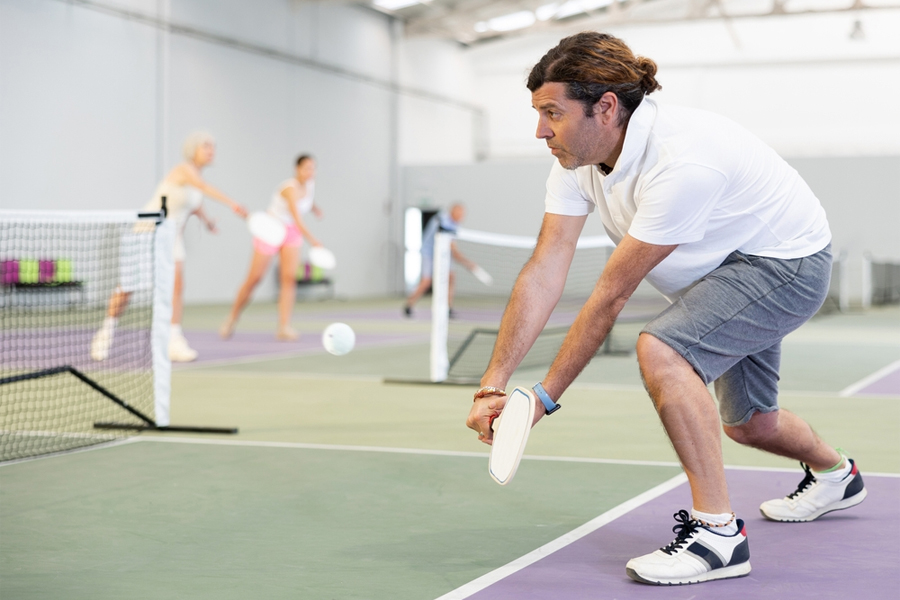
The forehand is the most common and fundamental stroke in pickleball. Struck on your dominant side, a strong forehand provides excellent ball control, powerful offensive drives, and flexible defense.
How to execute:
As the ball approaches, quickly raise your paddle arm to prepare.
Bring the paddle forward while rotating your torso in the direction of your swing.
Use the combined power of your arm and core to push the ball decisively toward your opponent.
Immediately reset your position to prepare for the next shot.
Pro Tips:
Always maintain a balanced stance.
Maintain proper spacing; standing too far from the ball leads to mishits.
Keep your eyes glued to the ball for precise directional control.
2. The Backhand

The backhand is struck on your non-dominant side (e.g., the left side for a right-handed player). It requires more finesse, flexibility, and paddle feel than the forehand, making it a crucial skill to drill.
How to execute:
Raise your paddle to prepare as the ball approaches.
Bring the paddle across your body to your non-dominant side, rotating your torso slightly.
Swing fluidly from back to front, using your arm and core to return the ball securely.
Pro Tips:
You can use a one-handed backhand for better reach and flexibility, or a two-handed backhand for added power and stability.
Stay balanced and avoid overreaching.
Timing is everything—watch the ball closely to know exactly when to initiate your swing.
3. The Overhead Smash

The overhead smash is an aggressive, powerful shot executed when the ball is lobbed high over your head. It requires excellent reflexes, spatial awareness, and precision to put the point away.
How to execute:
Stand with feet shoulder-width apart, knees slightly bent, and weight on the balls of your feet.
As the ball peaks, jump (if necessary) and bring the paddle behind your head.
Swing forward forcefully, directing the ball downward into the opponent's court as sharply as possible.
Aim for the corners or gaps where the opponent cannot reach.
Pro Tips:
Get your body completely under and behind the ball before swinging.
Coordinate your arm, shoulder, and core for maximum downward power.
4. The Slice
A slice generates backspin, causing the ball to float and drop softly, often skidding low upon bouncing. It requires excellent paddle control and touch.
How to execute:
Position yourself securely, turning your body slightly sideways to prep your paddle.
Keep your paddle high with a firm grip.
Swing with a high-to-low, brushing motion, sliding the paddle face under the ball to create backspin.
Pro Tips:
Focus on a smooth, rhythmic swing rather than raw power.
Practice repeatedly to control the depth and amount of spin.
A great slice keeps the ball low, forcing your opponent to hit upward defensively.
5. The Ping Pong Grip

Also known as the penhold grip, this is a specialized way of holding the paddle, often used for quick-reflex situations near the net.
How to execute:
Place your index finger on the paddle face and your thumb on the opposite side.
Wrap your remaining fingers loosely around the handle.
Keep your wrist entirely relaxed and flexible.
Pro Tips:
This grip allows for rapid angle changes and extreme wrist flexibility.
It is particularly effective for precise net play, volleys, and dinks.
6. The Volley

A volley is hitting the ball out of the air before it bounces. It is essential for fast-paced exchanges at the Non-Volley Zone (NVZ) line.
How to execute:
Stand in a ready position near the net with your paddle up.
As the ball approaches, step or lean forward to meet it.
Use a short, compact pushing motion from your arm and wrist to redirect the ball.
Pro Tips:
Do not take a massive swing. The ball already has pace; you just need to block and redirect it.
Keep your paddle in front of your body at all times for lightning-fast reactions.
7. The Dink

The dink is a soft, controlled shot that arcs gently over the net and drops into the opponent's Kitchen (NVZ). It is arguably the most critical strategic shot in pickleball, especially in doubles, as it neutralizes power and forces opponents to move.
How to execute:
Stand near the NVZ line with a relaxed grip.
Hit the ball at a low point in front of your body.
Use a gentle lifting motion from your shoulder and arm rather than a wristy snap.
Aim for a low parabolic arc that barely clears the net and lands softly.
Pro Tips:
Patience is key; focus entirely on placement and control rather than power.
Keep the ball unattackable. If your dink pops up too high, your opponent will smash it.
8. The Lob

The lob is a high-arching shot that sends the ball deep over the heads of opponents standing at the net. It can be used as a defensive reset or an offensive surprise.
How to execute:
Start with a low paddle position, getting slightly under the ball.
Use a smooth, lifting motion to push the ball high into the air.
Aim deep into the back third of the opponent's court.
Pro Tips:
Accuracy matters more than power.
Adding a little topspin can help the ball drop quickly inside the baseline.
Use the lob when opponents are hugging the net too aggressively.
9. Spin Techniques

Adding spin elevates you from a beginner to an advanced player, making your shots unpredictable and difficult to return.
Topspin: Brushing up on the back of the ball. The ball dips quickly over the net and accelerates forward upon bouncing. Slice (Backspin): Brushing down on the back of the ball. The ball floats longer and stays low upon bouncing.
How to execute:
Adjust your paddle angle and the path of your swing.
For topspin, swing low-to-high.
For slice, swing high-to-low.
Use a flexible wrist to brush the ball at the point of contact.
Pro Tips:
- Mix spin with your standard drives, drops, and lobs to keep your opponents guessing.
10. The Cross-Court Shot

Hitting cross-court is a tactical choice that creates wide angles, exploits open spaces, and targets an opponent's weaker side (often their backhand).
How to execute:
Identify the gaps in your opponent's positioning.
Adjust your paddle angle to direct the ball diagonally across the net.
Control your power so the ball dips inside the sideline.
Pro Tips:
Because the net is lowest in the middle and the diagonal line is the longest part of the court, cross-court shots give you a higher margin for error.
Adding spin makes a cross-court angle even sharper and harder to defend.
11. Fast Pace (Speed-Ups & Drives)

Fast-paced shots are aggressive attacks meant to end the point quickly or force a weak block from the opponent.
How to execute:
Use a firm, compact swing utilizing your shoulder, arm, and wrist.
Aim aggressively at gaps, down the middle, or directly at the opponent's feet/dominant hip.
Pro Tips:
Only speed the ball up when you have a good setup (e.g., an opponent's shot pops up too high).
Maintain directional control; hitting hard means nothing if the ball sails out of bounds.
12. Slow Pace (Pace Control & Drops)

Slowing the ball down is the ultimate defensive counter-measure. It breaks your opponent's rhythm and buys you time to transition to the net.
How to execute:
Use a very soft grip and absorb the incoming power of the ball.
Lift the ball with a high, gentle arc.
Add backspin to make the ball harder to attack when it lands.
Pro Tips:
- Use slow-paced shots (like the Third Shot Drop) when you are stuck at the baseline and need to move forward safely.
13. Court Footwork
Exceptional paddle skills are useless without the footwork required to get you to the ball.
Essential Movements:
Shuffle Steps: Quick, lateral sliding steps. Keeps you balanced and square to the net.
Running Steps: Traditional sprinting used to chase down deep lobs or wide angles.
Crossover Steps: Crossing one leg over the other to quickly change direction and cover large distances efficiently.
Jumping: Exploding upward for overhead smashes or to intercept high passing shots.
Pro Tips:
Keep your center of gravity low (knees bent) for explosive directional changes.
Always watch the ball and anticipate its trajectory so you can arrive at the spot before you need to swing.
14. Gear Up at Pickleball Central
Mastering these techniques takes practice, and having the right equipment makes all the difference on the court.
Shop at Pickleball Central here to explore a premium selection of the best paddles, balls, apparel, and accessories. With top-quality gear from trusted brands and incredibly fast shipping, you will have everything you need to elevate your game and dominate the competition in no time!